
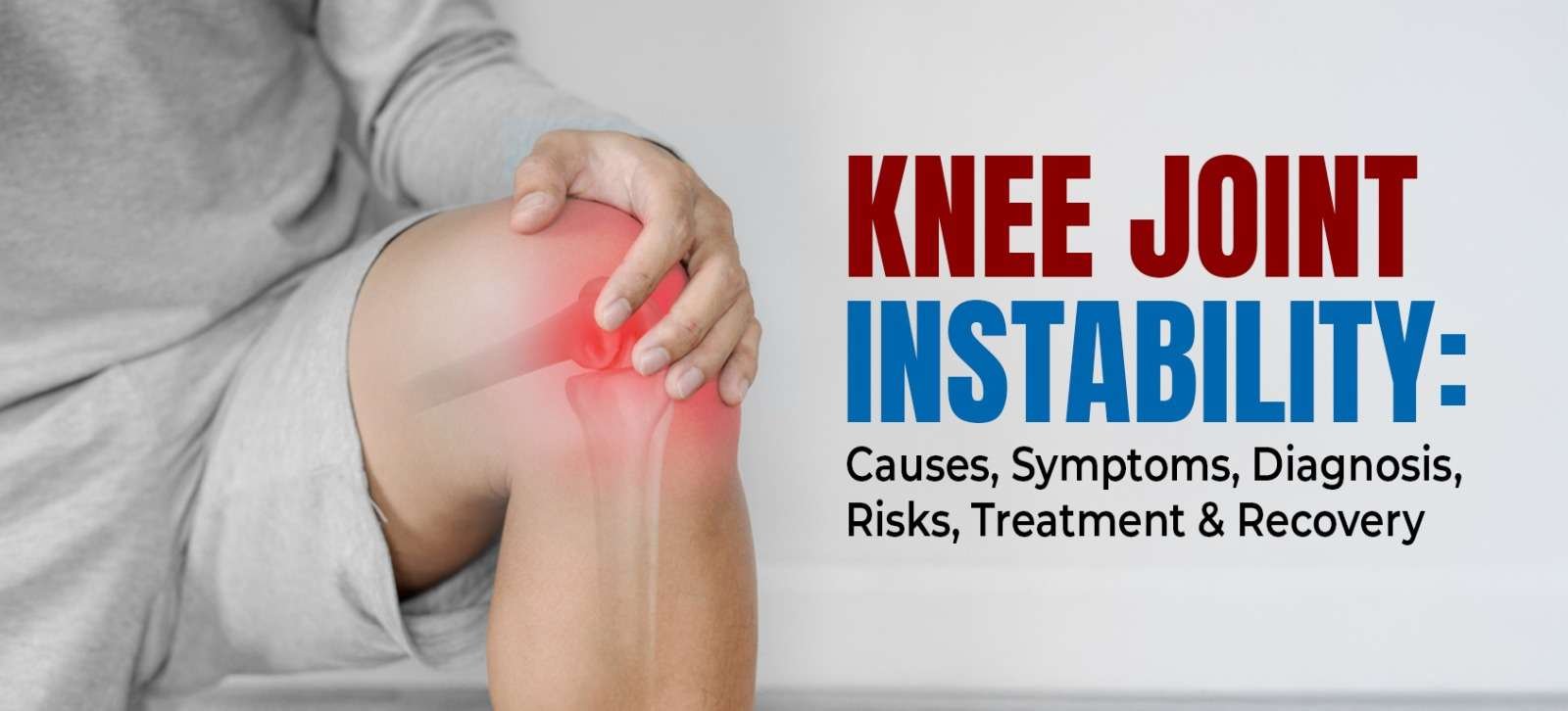
Knee Joint Instability: Causes, Symptoms, Diagnosis, Risks, Treatment and Recovery is a condition where the knee feels weak, unstable, or unable to support your body properly. Many people describe it as the knee “giving way” while walking or climbing stairs. At Arora Clinic, we regularly treat patients facing this issue using both conservative and advanced orthopedic solutions.

Knee joint instability occurs when the supporting structures of the knee—such as ligaments, tendons, and muscles fail to keep the joint stable. The knee joint plays a major role in everyday movement, including walking, running, sitting, and standing.
When stability is compromised, even simple movements can become painful and risky.
Understanding the knee structure helps explain instability. The knee consists of:
Damage to any of these components can result in instability.
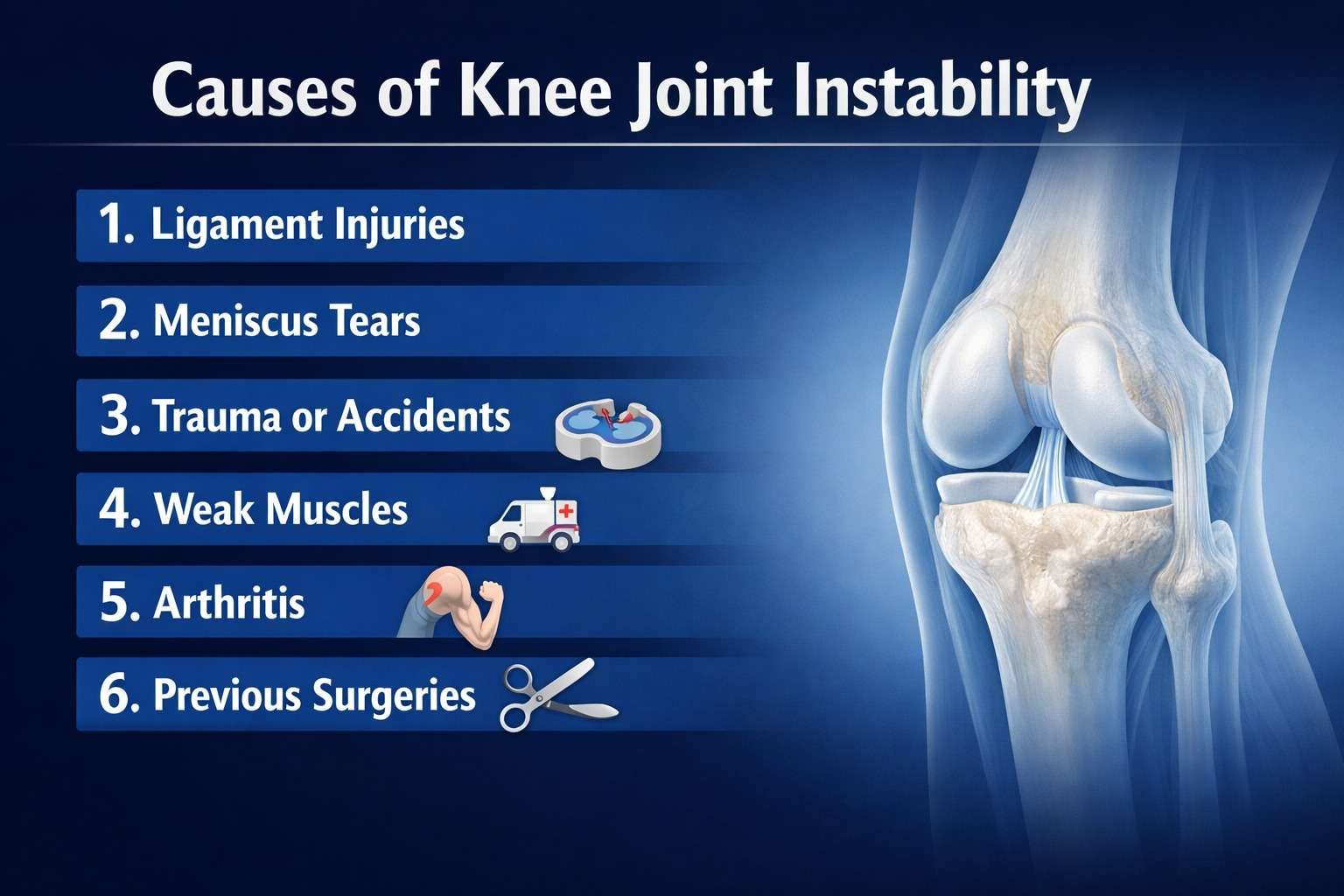
Knee instability can develop due to various reasons. The most common causes include:
Tears in ligaments such as the ACL are one of the leading causes. These injuries are common in sports activities.
The cartilage inside the knee can tear due to sudden twisting movements, leading to instability.
Falls, road accidents, or sudden impacts can damage the knee structure.
Weak thigh (quadriceps) muscles reduce support to the knee joint.
Degenerative conditions can weaken the joint over time.
Improper healing after knee surgery may also lead to instability.
The symptoms may vary depending on the severity, but common signs include:
If these symptoms persist, early medical evaluation is important.
At Arora Clinic, diagnosis is done using a structured approach:
The doctor checks knee movement, strength, and stability.
Understanding past injuries or conditions helps identify the root cause.
For expert orthopedic evaluation, you can visit: Orthopedic Surgeon Thane
Delaying treatment can lead to serious complications such as:
Timely treatment can prevent these long-term problems.
Treatment depends on the severity and cause of the condition.
Mild to moderate cases can often be managed without surgery:
These methods are effective when the damage is not severe.
In severe cases, surgery may be necessary to restore knee function.
One of the most advanced techniques today is Robot Assisted Knee Replacement Surgery in Mumbai which ensures precision and better outcomes.
Other surgical treatments include:
Patients often consult a robotic knee replacement surgeon in Mumbai for accurate implant placement and long-term success.
Modern technology has transformed knee surgeries. Procedures like robotic knee replacement Surgery in Mumbai offer several advantages:
Choosing a robotic knee replacement specialist in Mumbai ensures access to advanced care and improved results.
Recovery plays a key role in successful treatment.
Patients treated by a robotic knee replacement Doctor in Mumbai often experience smoother recovery due to minimally invasive techniques.
You can reduce the risk of knee instability by following simple steps:
Regular check-ups at a robotic knee replacement specialist clinic in Mumbai can help detect issues early.
Seek medical attention if you experience:
You can also visit the clinic location here: Orthopedic operation thane
Arora Clinic is known for providing advanced orthopedic care with a patient-focused approach. We combine modern technology with expert knowledge to deliver effective treatment solutions.
Our strengths include:
Whether you need physiotherapy or advanced procedures like Robot Assisted Knee Replacement Surgery in Mumbai, our goal is to help you regain mobility and live pain-free.
Knee Joint Instability: Causes, Symptoms, Diagnosis, Risks, Treatment and Recovery is a condition that should not be ignored. Early diagnosis and proper treatment can prevent complications and restore your quality of life.
If you are experiencing knee discomfort or instability, consult the experts at Arora Clinic today and take the first step toward a healthier, more active life.
WhatsApp us