
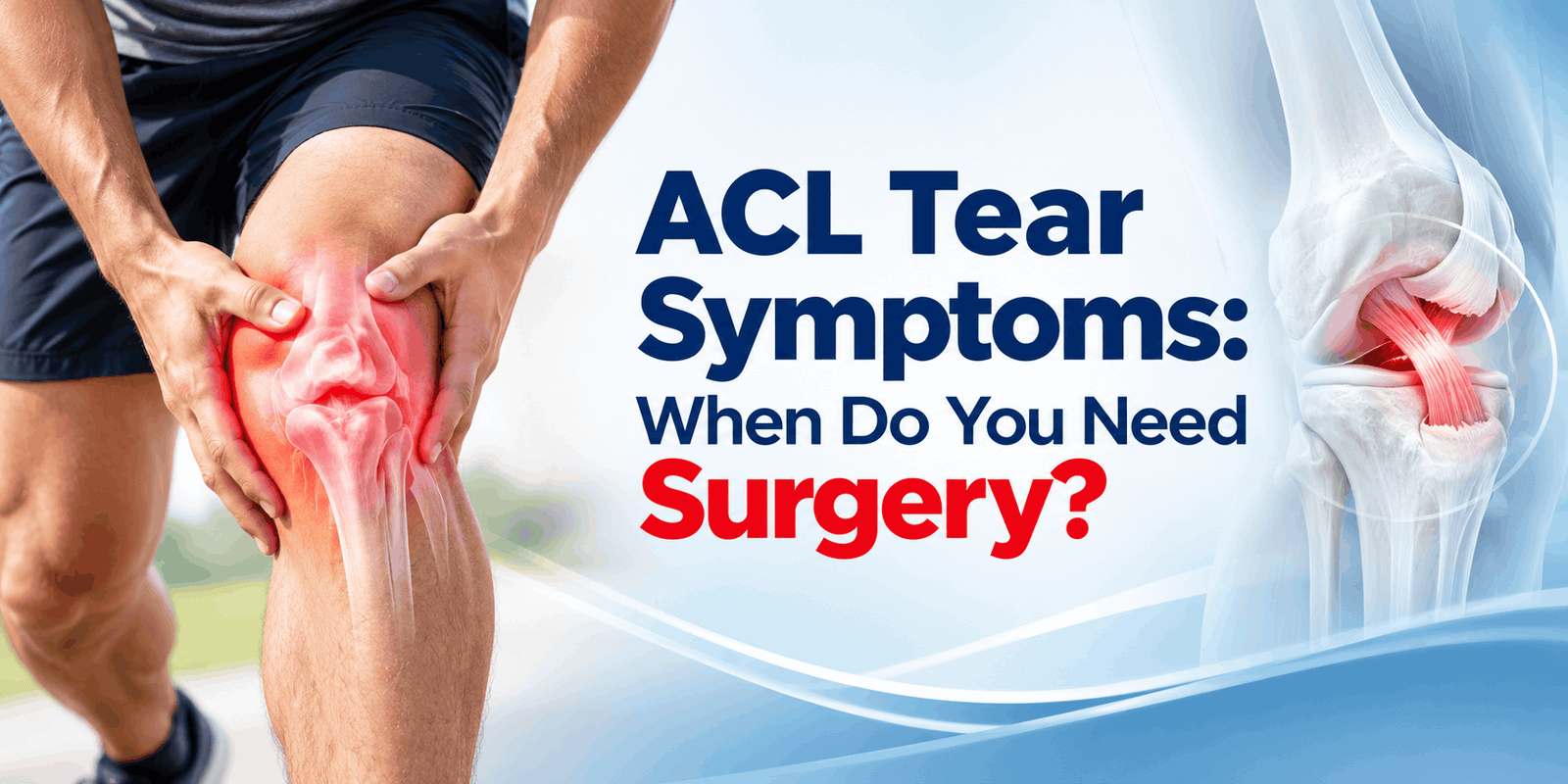
You twist your knee while playing football, running, or even stepping off a curb. You hear a “pop.” Your knee swells and feels weak. Many people ignore this and hope it will heal on its own. But these could be ACL tear symptoms, and the right treatment at the right time can save your knee from long-term damage.
In this blog, we explain the signs of an ACL tear, when you can heal without surgery, and when you need an operation. If you are looking for an orthopedic surgeon in Thane this guide will help you take the first step.
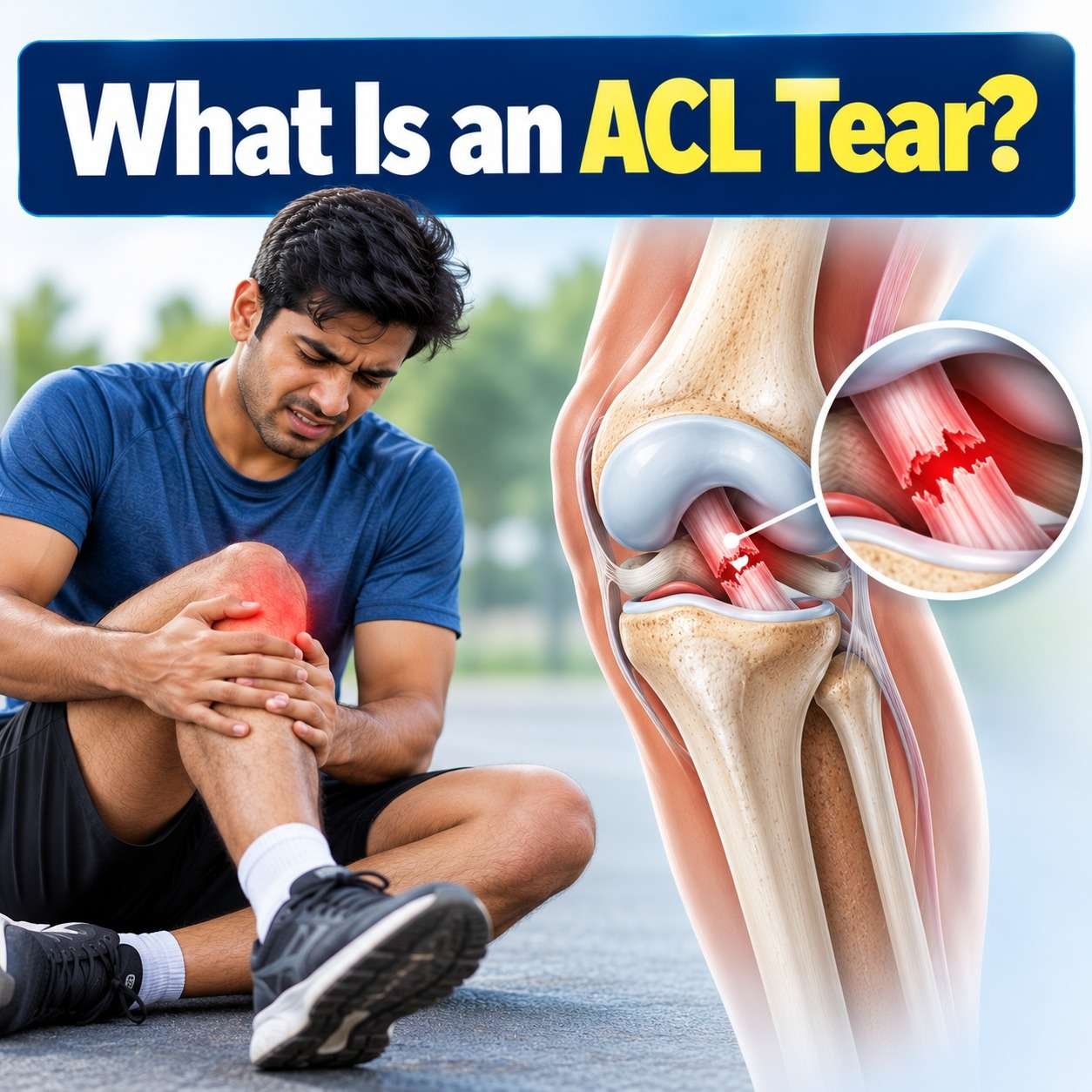
The ACL (anterior cruciate ligament) is a strong band inside your knee. It connects your thigh bone to your shin bone. It keeps your knee stable when you run, jump, or change direction.
An ACL tear happens when this ligament is stretched too far or breaks. It can be a partial tear or a complete tear. It is common in sports like football, cricket, badminton, and basketball. It can also happen in a fall or a road accident.
Knowing the signs early helps you get treatment faster. Watch out for these:
Not everyone has all these signs. Some people feel only mild pain, but the knee keeps “giving way.” This is a warning sign that should not be ignored.
An orthopedic doctor in Thane will first ask how the injury happened. Then the doctor will check your knee for swelling, movement, and stability. Simple tests like the Lachman test show if the ligament is loose.
An MRI scan is usually advised. It shows the exact type of tear and also checks for damage to the meniscus (the knee cushion) and other ligaments. X-rays may be done to rule out a broken bone.
Not every ACL tear needs an operation. Non-surgical treatment may work if:
Treatment may include rest, ice, a knee brace, pain medicine, and a physiotherapy plan to strengthen the muscles around the knee. Strong thigh and hamstring muscles can give the knee extra support.
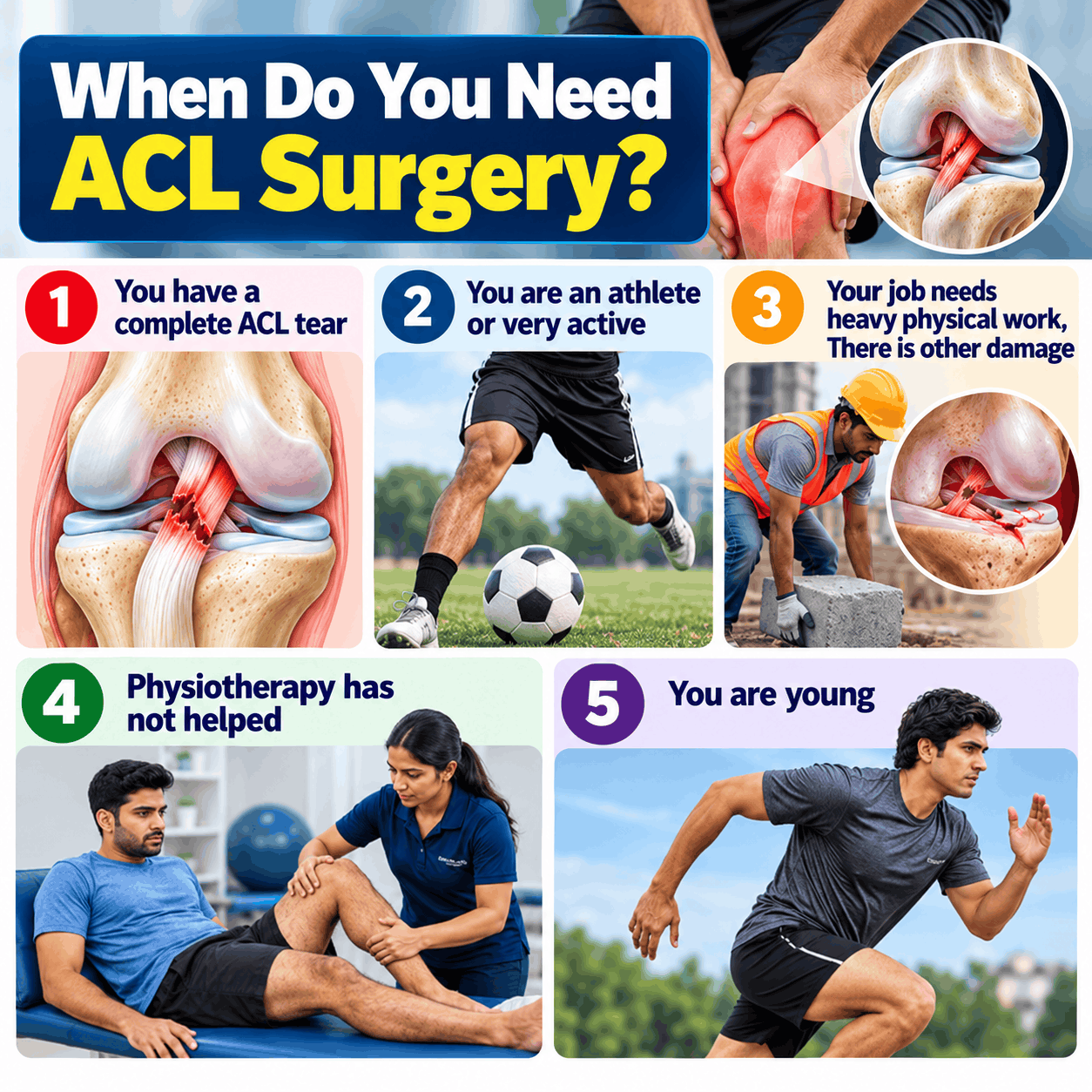
This is the most important question. You may need orthopedic surgery in Thane if:
If an unstable knee is left untreated, it can slowly damage the cartilage and the meniscus. Over time, this can lead to early arthritis. Some patients with severe long-term damage may even need a knee operation specialist for advanced care. You can read about such treatments here:
ACL reconstruction is usually done with a small camera and tiny tools, called arthroscopy or keyhole surgery. The surgeon makes small cuts, removes the torn ligament, and replaces it with a graft. The graft is a strong piece of tendon, taken from your own body or from a donor.
Benefits of this orthopedic operation in Thane include:
Most patients go home within a day or two.
Recovery takes patience. Here is a simple timeline:
Follow your surgeon’s advice. Returning too early is the main reason for re-injury.
Many people wait months before seeing a doctor. But early advice gives you more choices. If you visit soon after the injury, your doctor can plan the best path, with or without surgery. Delay can mean more damage inside the knee and a longer recovery.
Look for these qualities when searching for the best orthopedist in Thane:
If you are searching for an orthopedic doctor in Thane West you can also check the clinic location and patient feedback here: Knee Specialist
At Dr Bakul Arora, patients get careful diagnosis and honest guidance for knee and joint problems. Whether you need advice for a sports injury or a long-standing knee issue, you will get a treatment plan that suits your age, lifestyle, and goals. As an experienced orthopedic surgeon in Thane Dr Arora focuses on safe treatment and smooth recovery. The orthopedic clinic in Thane is easy to reach for patients across Thane and nearby areas.
WhatsApp us