

Shoulder pain, stiffness, and difficulty moving your arm can affect your daily life. Expert Solutions for Treating Shoulder Arthritis focus on reducing pain, improving joint movement, and helping patients return to their usual activities. Shoulder arthritis is a condition in which the cartilage inside the shoulder joint gradually wears down, causing the bones to rub against each other. At Arora Clinic, patients can learn about suitable treatment options based on their symptoms, joint condition, and medical needs.
Shoulder arthritis is a condition that affects the cartilage covering the bones in the shoulder joint. Healthy cartilage allows the bones to move smoothly. When this cartilage becomes damaged or wears away, movement can become painful and difficult.
The shoulder has two main joints: the glenohumeral joint, where the upper arm bone meets the shoulder socket, and the acromioclavicular joint, where the collarbone meets part of the shoulder blade. Arthritis can affect either joint.
Osteoarthritis is one of the most common types. Other forms may include rheumatoid arthritis and arthritis that develops after a shoulder injury. The right treatment depends on the type of arthritis and how much it affects the joint.
For patients who also experience knee joint problems, Robotic Knee Replacement Surgery in Navi Mumbai may be an option when severe knee arthritis limits mobility and non-surgical treatments no longer provide sufficient relief. Consulting an experienced robotic knee replacement surgeon in Navi Mumbai can help patients understand their treatment options based on their condition and overall health.

Shoulder arthritis may develop gradually, and symptoms can become more noticeable over time. Recognising the warning signs can help patients seek medical advice before the condition significantly affects everyday activities.
Common symptoms include:
These symptoms can also occur with rotator cuff problems, frozen shoulder, and other conditions. A proper medical examination is important to identify the cause.
Several factors can contribute to the development of shoulder arthritis. Understanding the cause helps a specialist recommend an appropriate treatment plan.
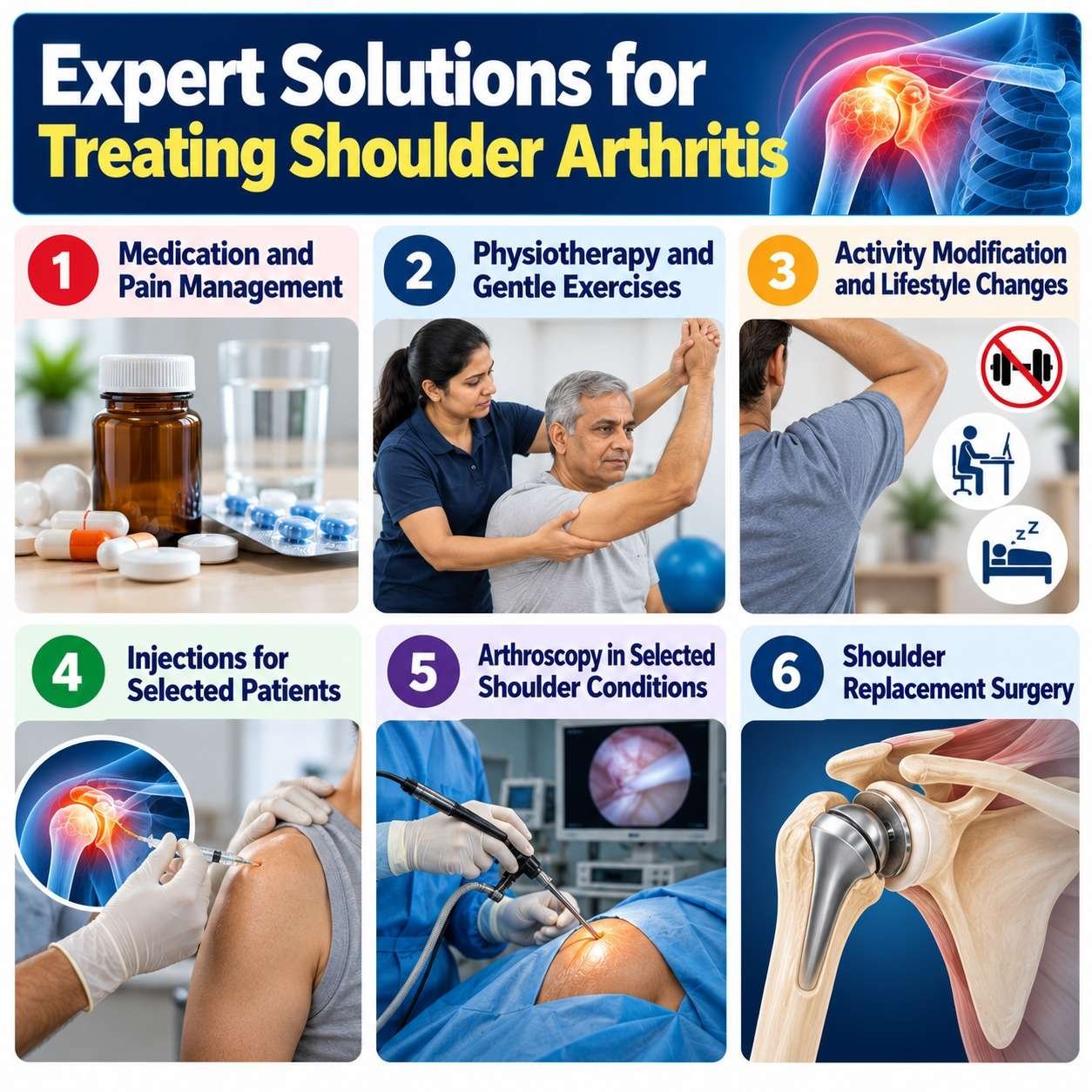
Treatment depends on the severity of the condition, the patient’s age, activity level, overall health, and response to previous treatments. Many patients begin with non-surgical options, while surgery may be considered when pain and disability remain severe. For patients with advanced knee arthritis, consulting a robotic knee replacement doctor in Navi Mumbai can help determine whether robotic-assisted surgery is an appropriate treatment option based on their individual needs.
A doctor may recommend suitable pain-relief medicines or anti-inflammatory medicines to help control symptoms. The choice depends on the patient’s medical history, other medications, and possible side effects.
These medicines may provide temporary relief, but they do not restore cartilage that has already worn away. Patients should avoid taking medicines regularly without appropriate medical advice.
Physiotherapy can help maintain shoulder movement, improve muscle strength, and support joint function. A physiotherapist may recommend gentle range-of-motion exercises, stretching, and strengthening activities according to the patient’s condition.
Exercises should not cause significant or lasting pain. Avoid forcing the shoulder through painful movements, lifting heavy weights during a flare-up, or following an exercise routine without professional guidance when symptoms are severe. For patients experiencing advanced knee arthritis, a robotic knee replacement specialist clinic in Navi Mumbai can provide an evaluation to determine whether robotic knee replacement surgery in Navi Mumbai is a suitable treatment option.
Small changes in daily habits may help reduce stress on the shoulder joint.
Helpful measures include:
These measures may improve comfort, although they cannot reverse advanced cartilage damage.
Depending on the diagnosis, a specialist may consider an injection into the joint to help manage pain and inflammation. Corticosteroid injections may provide short-term relief for some patients.
The benefits and risks should be discussed before treatment. Injections do not rebuild cartilage, and repeated injections may not be appropriate for every patient.
Arthroscopy is a minimally invasive surgical technique that uses a small camera and specialised instruments to examine and treat certain problems inside a joint.
For patients with shoulder symptoms, arthroscopy may be useful for selected associated conditions. However, it generally does not provide a lasting solution for advanced shoulder osteoarthritis, where the cartilage has been extensively damaged.
Patients can learn more about suitable minimally invasive joint procedures through the Best Arthroscopy Specialist Clinic A specialist can determine whether this approach is appropriate after examining the shoulder.
When arthritis becomes severe and non-surgical treatments no longer provide adequate relief, shoulder replacement surgery may be considered. For patients with advanced knee arthritis, robotic knee replacement Surgery in Navi Mumbai may be another treatment option to discuss with an orthopaedic specialist.
During shoulder replacement, damaged joint surfaces are replaced with artificial components. The type of replacement depends on factors such as the condition of the rotator cuff, the extent of bone damage, and the patient’s overall health. Similarly, Robot Assisted Knee Replacement Surgery in Navi Mumbai may be considered for eligible patients with severe knee arthritis after a thorough medical evaluation.
Shoulder or knee replacement surgery may help reduce pain and improve joint function in appropriately selected patients. Recovery usually includes a structured rehabilitation programme, and the final outcome depends on the patient’s condition, overall health, and adherence to medical advice.
An accurate diagnosis is essential before starting treatment. A specialist may begin by asking about the patient’s symptoms, previous injuries, medical history, and daily activities.
The examination may include checking shoulder movement, tenderness, strength, and joint stability. An X-ray can help identify joint-space narrowing, bone changes, and other signs of arthritis. In selected cases, an MRI, ultrasound, or additional tests may be required to assess the surrounding tendons and soft tissues or investigate other possible causes.
The findings help the doctor determine the severity of the condition and discuss suitable treatment options.
Occasional shoulder discomfort may improve with rest and appropriate activity changes. However, persistent pain, increasing stiffness, or difficulty performing daily tasks should not be ignored.
Consider seeking medical advice if:
Seek urgent medical attention if shoulder pain follows a serious injury, the joint appears deformed, or you develop a hot, red, swollen joint with fever. Sudden shoulder pain accompanied by chest discomfort, breathlessness, or sweating also requires emergency assessment.
Not every case of shoulder arthritis can be prevented, particularly when age-related changes or previous injuries are involved. However, certain habits may help protect shoulder function.
Maintain appropriate muscle strength, practise safe lifting techniques, avoid repeatedly pushing through painful movements, and seek timely care for significant shoulder injuries. If you have an existing shoulder condition, follow the exercise and activity recommendations provided by your healthcare professional.
Early assessment can help identify the problem and reduce the risk of avoidable complications.
Shoulder arthritis can cause persistent pain, stiffness, and reduced movement, but several treatment options may help manage its effects. Depending on the condition, treatment may include medication, physiotherapy, activity modification, selected injections, or shoulder replacement surgery.
At Arora Clinic, patients can seek medical guidance to understand their joint symptoms and explore appropriate orthopaedic care. If you are experiencing persistent shoulder discomfort, a clinical assessment can help identify the cause and guide the next steps.
For directions to the clinic, you can use the Arthroscopy operation thane
WhatsApp us