
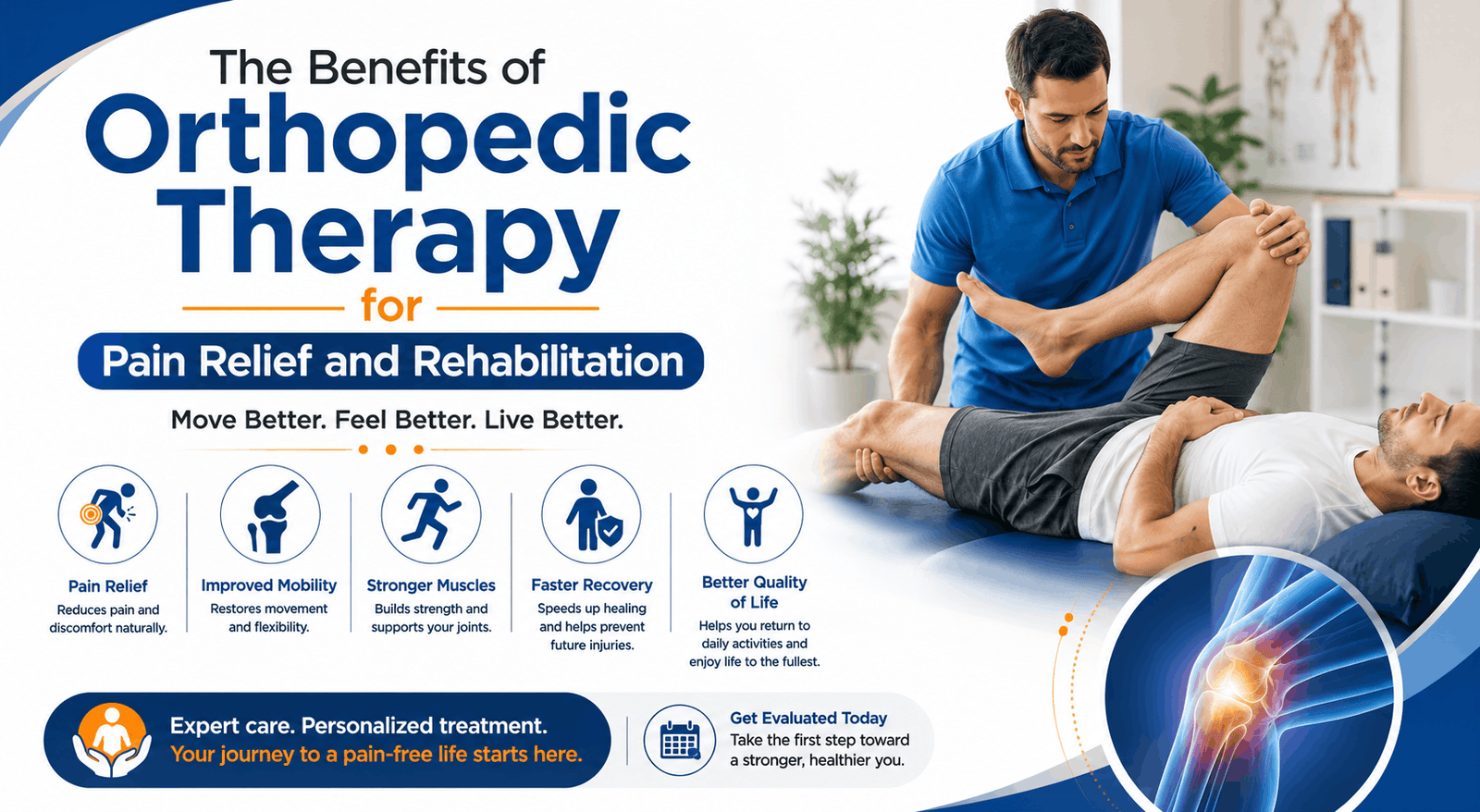
The Benefits of Orthopedic Therapy for Pain Relief and Rehabilitation can be seen in the way it helps people manage pain, improve movement, and regain strength after an injury or surgery. Orthopedic therapy focuses on problems affecting the bones, joints, muscles, ligaments, and other parts of the musculoskeletal system.
Joint pain, stiffness, muscle injuries, and movement difficulties can affect everyday activities such as walking, climbing stairs, working, or exercising. A structured rehabilitation programme can help improve physical function and support a safer return to daily activities.
Orthopedic therapy can be useful for people with many different musculoskeletal problems. It may benefit:
The type of therapy required depends on the patient’s condition. A professional assessment is important before starting a rehabilitation programme.
Orthopedic therapy is a type of rehabilitation designed to improve problems related to the muscles, bones, joints, tendons, and ligaments. It may be recommended for people with pain, stiffness, weakness, reduced mobility, or difficulty performing normal activities.
A physiotherapist or orthopedic therapist first assesses the patient’s condition, movement, muscle strength, flexibility, and functional limitations. Based on this assessment, a personalised therapy plan may be prepared.
Treatment can include stretching, strengthening exercises, mobility exercises, balance training, manual therapy, and other techniques. The goal is not only to make the patient feel better but also to improve movement and physical function.
One of the main reasons people choose orthopedic therapy is to manage pain while improving physical function.
Gentle and controlled movements can help improve joint flexibility and reduce stiffness. Regular therapy may make everyday movements more comfortable.
Pain can cause people to avoid movement, which may lead to further stiffness and weakness. Appropriate exercises can gradually improve range of motion and make activities such as walking and climbing stairs easier.
Strong muscles provide better support to the joints. Strengthening exercises can help improve stability and make movement more efficient.
Therapy can teach patients how to move correctly while performing daily activities. Better movement patterns may reduce unnecessary stress on painful areas.
For some patients, exercise and rehabilitation can form an important part of a broader pain-management plan. However, patients should never stop or change prescribed medication without speaking with their healthcare professional.
Rehabilitation is an important part of recovery after an injury or orthopedic procedure. Simply resting may not be enough to restore normal strength and movement.
A structured programme can gradually work on flexibility, muscle strength, balance, coordination, and functional movement. Exercises are usually adjusted as the patient becomes stronger.
For example, someone recovering from a knee problem may initially focus on simple movement and strengthening exercises. Later, the programme may include balance work, walking exercises, and activities that are closer to the patient’s normal routine.
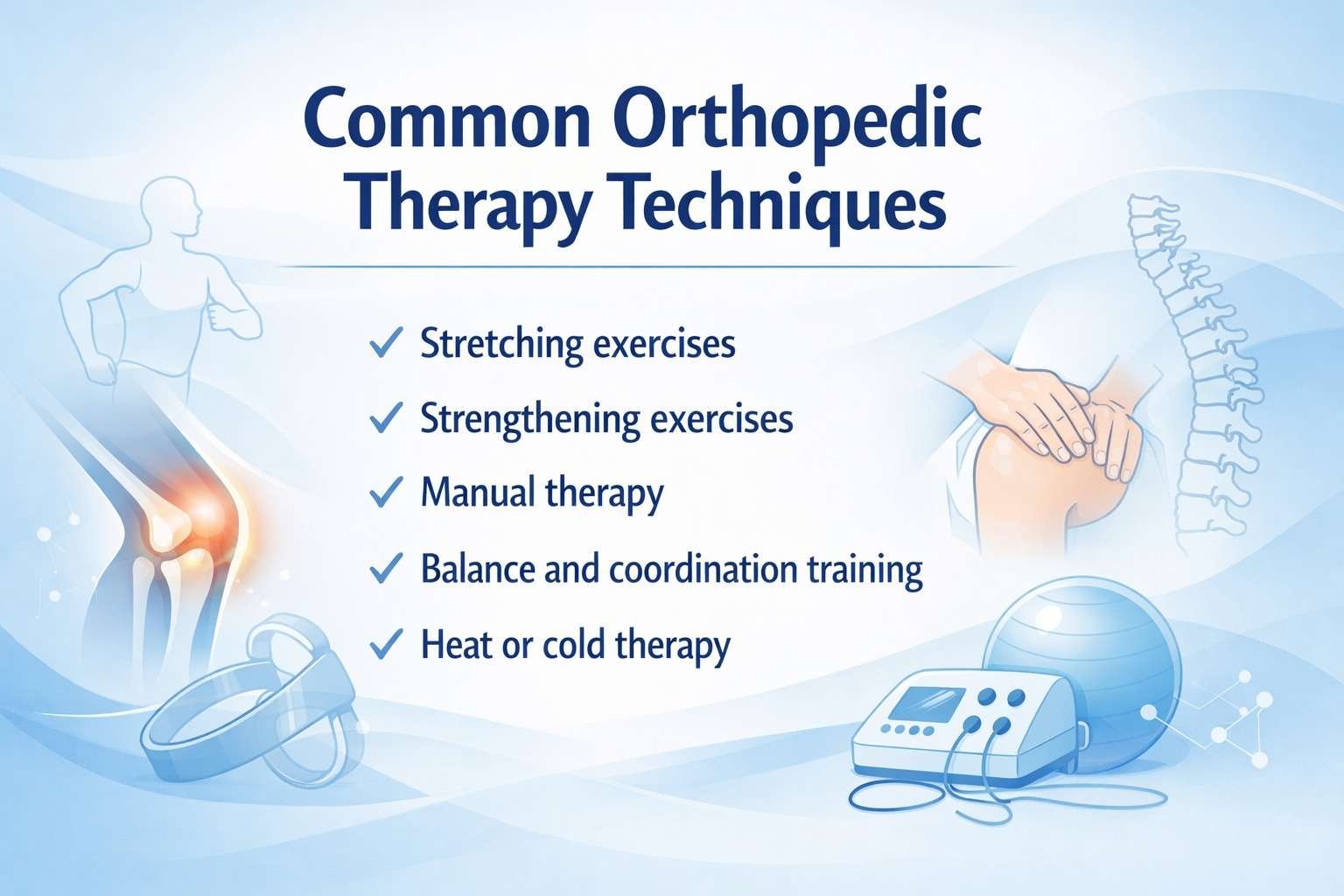
Different techniques may be used depending on the patient’s condition and recovery stage.
Stretching exercises can help improve flexibility and reduce stiffness.
Strengthening exercises help build the muscles that support affected joints.
Mobility exercises focus on improving the movement of joints and surrounding tissues.
Manual therapy may involve hands-on techniques to improve movement and comfort when appropriate.
Balance and coordination training can help patients improve stability and confidence while walking or performing other activities.
Heat or cold therapy may also be recommended in selected situations to help manage discomfort.
The treatment plan should always be personalised rather than following the same exercises for every patient.
Rehabilitation can be particularly important after orthopedic surgery. Patients may experience weakness, stiffness, reduced mobility, or difficulty performing everyday activities during the early stages of recovery.
A gradual therapy programme can help restore movement and strength. The exercises may change as recovery progresses, allowing the patient to safely increase activity.
For people considering Robotic Knee Replacement Surgery in Navi Mumbai it is important to understand that recovery involves more than the surgical procedure itself. Rehabilitation and following post-operative instructions can play an important role in regaining mobility.
Patients should discuss their expected recovery process, exercises, activity restrictions, and follow-up care with their Orthopedic Surgeon
If you have ongoing pain or difficulty moving, an evaluation by an experienced orthopedic doctor can help identify the cause and determine the most suitable treatment approach.
There is no single recovery timeline for everyone. The duration of therapy depends on the type and severity of the condition, the patient’s age, overall health, physical activity, and whether surgery was involved.
Some patients may improve within a few weeks, while others may need rehabilitation for several months. Consistency is important because skipping exercises or returning to strenuous activity too quickly may affect recovery.
People researching a robotic knee replacement surgeon in Navi Mumbai should also ask about the rehabilitation process before deciding on treatment. Understanding both the procedure and recovery plan can help patients prepare for the treatment journey.
You may benefit from professional evaluation if you experience:
Early evaluation can help identify the cause of the problem and guide appropriate treatment.
In cases of severe knee damage, a robotic knee replacement specialist in Navi Mumbai may evaluate whether surgical treatment is appropriate. Not every patient with knee pain requires surgery, so proper diagnosis is important.
Patients can support their rehabilitation by following a few simple habits:
Perform the exercises recommended by your therapist and avoid adding difficult exercises without professional guidance.
Doing too much too soon can place unnecessary stress on an injured or recovering area. Increase activity gradually.
Good posture during sitting, standing, and everyday activities can reduce unnecessary strain on the back and joints.
Complete inactivity may lead to weakness and stiffness. Follow your healthcare professional’s advice about safe physical activity.
Consistency helps your therapist monitor progress and make changes to your programme when required.
Every recovery plan is different. Follow the instructions provided by your doctor and therapist, particularly after surgery.
Choosing the right professional is an important part of managing orthopedic problems. Patients should consider the doctor’s experience, treatment approach, available facilities, and rehabilitation support.
People looking for a robotic knee replacement Doctor in Navi Mumbai should discuss their symptoms, diagnostic reports, treatment options, expected results, and recovery requirements before making a decision.
For patients who may require advanced knee treatment, a robotic knee replacement specialist clinic in Navi Mumbai may provide assessment and treatment planning under one care pathway.
Orthopedic therapy can support pain management, improve mobility, strengthen muscles, and help people return to their everyday activities. Whether the problem is caused by an injury, arthritis, joint pain, or surgery, rehabilitation should be based on the patient’s individual needs.
For suitable patients with advanced knee damage, robotic knee replacement Surgery in Navi Mumbai may be one treatment option. However, the right treatment depends on the patient’s diagnosis, symptoms, activity level, and overall health.
Recovery does not end with treatment. Consistent rehabilitation, appropriate exercise, healthy movement habits, and regular medical guidance can all contribute to better long-term function.
If you are considering Robot Assisted Knee Replacement Surgery in Navi Mumbai speak with an orthopedic specialist to understand whether the procedure is suitable for your condition and what the recovery process may involve.
WhatsApp us