

Knee pain is one of the most common joint problems that affects people of all ages. It may happen because of an injury, arthritis, overuse, or cartilage damage. Many people ignore the early symptoms until the pain starts affecting their daily activities. How to Know If Your Knee Pain Is Due to Cartilage Damage is a common question because cartilage injuries often develop slowly and may not cause severe pain in the beginning. Understanding the symptoms, causes, diagnosis, and treatment options can help you get timely medical care and prevent long-term joint damage.
Cartilage is a smooth, flexible tissue that covers the ends of the bones inside your knee joint. It acts as a cushion, allowing the bones to move smoothly without rubbing against each other. Healthy cartilage absorbs shock during walking, running, climbing stairs, and other daily activities.
When cartilage becomes damaged due to injury, aging, or wear and tear, the knee joint loses its natural cushioning. This can result in pain, stiffness, swelling, and difficulty moving the knee.
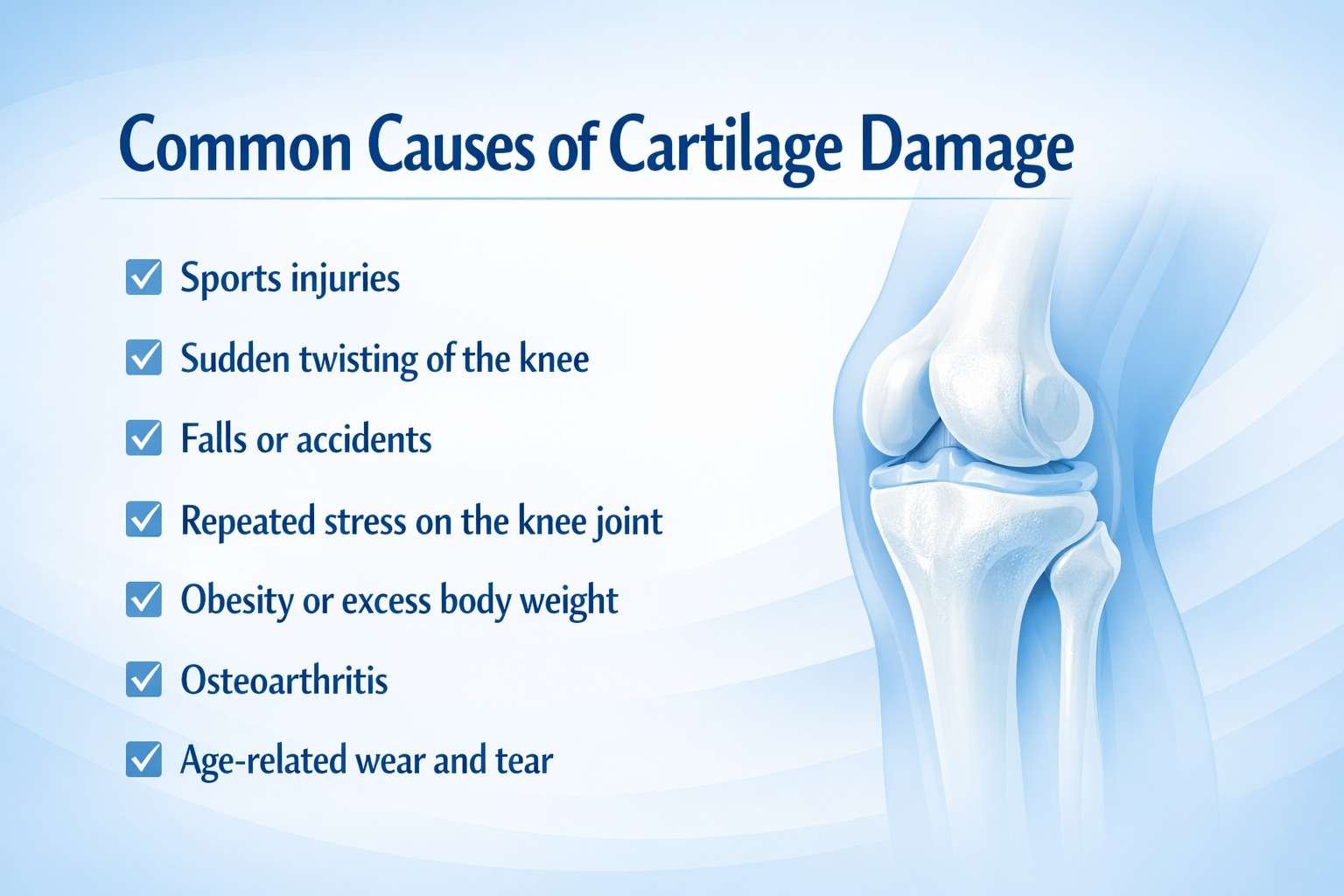
Cartilage damage can happen for several reasons, including:
Sports injuries
Sudden twisting of the knee
Falls or accidents
Repeated stress on the knee joint
Obesity or excess body weight
Osteoarthritis
Age-related wear and tear
People who participate in high-impact sports or physically demanding jobs are more likely to develop cartilage injuries.
Recognizing the symptoms early can help prevent further joint damage.
Persistent Knee Pain
Pain that continues for weeks or months, especially during walking, climbing stairs, squatting, or standing for long periods, may indicate cartilage damage.
Swelling Around the Knee
A damaged cartilage surface can cause inflammation inside the knee joint, leading to swelling that may come and go.
Clicking or Grinding Sounds
If your knee produces clicking, grinding, or cracking sounds during movement, it may be because the cartilage surface has become rough.
Knee Locking
Sometimes loose pieces of damaged cartilage interfere with joint movement, causing the knee to lock or get stuck temporarily.
Stiffness
Difficulty bending or straightening the knee completely is another common symptom.
Feeling That the Knee Gives Way
Cartilage damage may reduce joint stability, making you feel like your knee might buckle while walking.
Some individuals have a greater chance of developing cartilage damage, including:
Adults over 40 years
Athletes
People who are overweight
Individuals with previous knee injuries
Patients with osteoarthritis
Workers involved in repetitive knee movements
Early medical evaluation is important if you fall into these categories and experience ongoing knee pain.
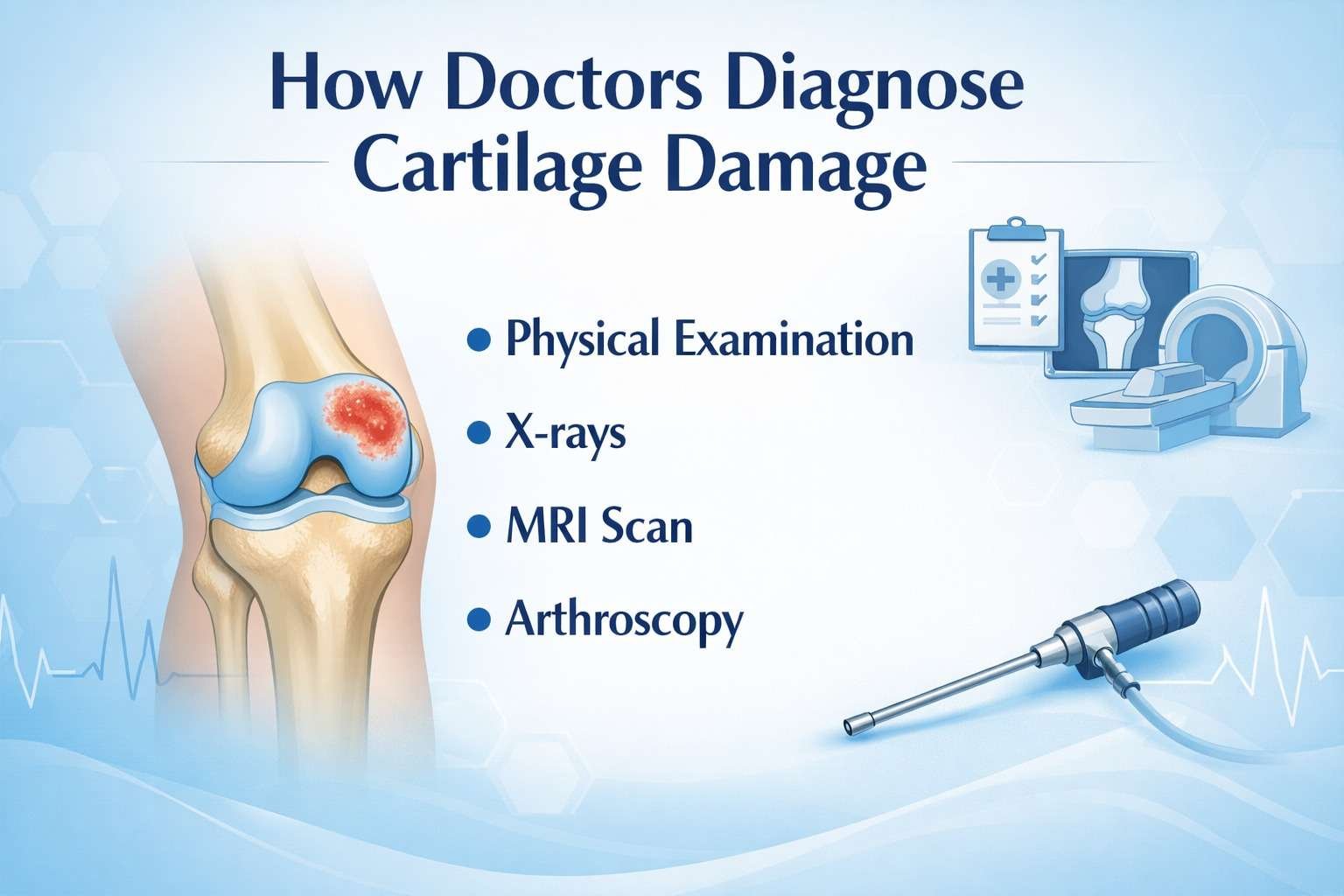
Diagnosing cartilage damage usually involves a detailed examination and imaging tests.
Physical Examination
The doctor checks:
Pain location
Swelling
Knee movement
Joint stability
Walking pattern
X-rays
Although cartilage itself does not appear on X-rays, they help rule out fractures and identify arthritis.
MRI Scan
MRI is the most useful imaging test because it clearly shows cartilage injuries, ligament damage, and other soft tissue problems.
Arthroscopy
In some cases, a minimally invasive arthroscopy is performed to directly examine the cartilage inside the knee.
Unlike many other tissues in the body, cartilage has very limited blood supply. This means small injuries may improve with proper care, but severe cartilage damage usually does not heal completely on its own.
Ignoring symptoms may lead to worsening pain, joint stiffness, and eventually osteoarthritis.
Treatment depends on the severity of the injury, your age, activity level, and overall knee condition.
Non-Surgical Treatments
Many patients improve with conservative treatment such as:
Rest
Ice therapy
Anti-inflammatory medications
Physiotherapy
Weight management
Knee strengthening exercises
Activity modification
These treatments help reduce pain and improve knee function.
Surgical Treatment
When conservative treatment fails or cartilage damage is severe, surgery may be recommended.
Modern surgical techniques preserve healthy bone while improving joint alignment and movement. In advanced arthritis cases, Robot Assisted Knee Replacement Surgery in Mumbai offers greater precision during joint replacement procedures, helping many patients recover with improved function.
Patients looking for long-term treatment can also consult a robotic knee replacement surgeon in Mumbai after a complete clinical evaluation to determine whether robotic-assisted surgery is appropriate for their condition.
Simple lifestyle changes can help reduce the risk of cartilage damage.
Maintain a healthy body weight.
Exercise regularly with low-impact activities like swimming or cycling.
Strengthen thigh and leg muscles.
Warm up before sports.
Wear supportive footwear.
Avoid sudden twisting movements.
Treat knee injuries promptly.
Healthy habits reduce stress on the knee joint and improve long-term mobility.
Consult a doctor immediately if you experience:
Knee pain lasting more than two weeks
Severe swelling
Difficulty walking
Knee locking repeatedly
Inability to bend or straighten the knee
Pain after a significant injury
Early diagnosis often leads to better treatment outcomes and helps prevent permanent joint damage.
If your symptoms continue despite home care, consult an experienced robotic knee replacement specialist in Mumbai for a detailed assessment and personalized treatment plan.
For patients with advanced knee arthritis, a robotic knee replacement Doctor in Mumbai can evaluate whether robotic-assisted joint replacement is the right option based on your overall health and knee condition.
Those seeking comprehensive orthopedic care may also visit a robotic knee replacement specialist clinic in Mumbai where treatment plans are customized according to the severity of cartilage damage and the patient’s lifestyle goals.
Arora Clinic is committed to providing comprehensive orthopedic care with a patient-focused approach. Every patient undergoes a thorough evaluation before recommending the most suitable treatment. Whether your condition requires conservative management or advanced surgical intervention, the clinic focuses on improving mobility, reducing pain, and helping patients return to their normal activities safely.
To learn more about treatment options, visit the Knee Replacement Surgeon page:
You can also locate the clinic and book an appointment through Google Maps:
Knee Replacement doctor
Understanding How to Know If Your Knee Pain Is Due to Cartilage Damage can help you seek treatment before the condition becomes more serious. Persistent pain, swelling, stiffness, clicking sounds, or knee locking should never be ignored. Early diagnosis, proper rehabilitation, and timely medical treatment can preserve knee function and improve your quality of life.
If you are experiencing ongoing knee pain, consult the orthopedic experts at Arora Clinic for a detailed evaluation and a personalized treatment plan that suits your condition.
WhatsApp us